Book Club: A Handwritten Font for Modern Digital Design
In the world of web and UI design, typography isn’t just about making words legible. It’s a foundational tool for establishing mood, guiding users, and building trust. When a project calls for warmth, elegance, or a touch of personal authenticity, the choice of typeface becomes critical. Book Club, a contemporary handwritten font inspired by classic calligraphy, enters this space as a uniquely versatile asset for digital creators.
The Personality of Book Club in Digital Spaces
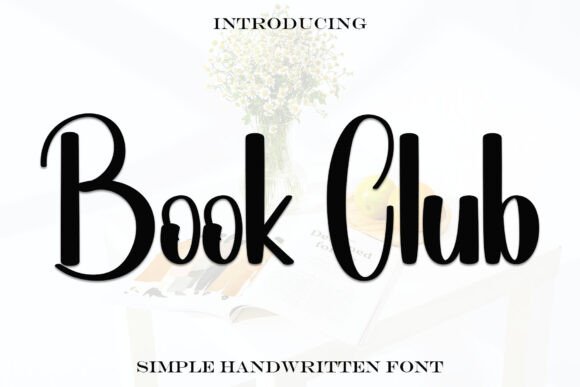
Book Club is a script font with impeccable form. It carries the timeless feel of elegant penmanship but is rendered with a clean, modern consistency that translates perfectly to screens. This balance is its greatest strength: it feels human and artistic without sacrificing the precision needed for professional digital layouts. The font’s personality is one of curated sophistication. It doesn’t shout; it invites. For a web designer, this means it can establish a brand tone that is approachable yet refined, casual yet trustworthy.
Visual Hierarchy and Layout Rhythm
In any website or app, visual hierarchy dictates where a user looks first. Book Club, as a display font, is inherently suited to command attention. Its flowing strokes and distinct character shape create a natural focal point. Use it for your primary hero title on a landing page, and it immediately sets a tone of quality and care. On a product page for a boutique online store, applying Book Club to the product name can elevate it from a mere item to a curated offering.
Its application should be strategic. Due to its detailed handwritten nature, it is best reserved for headlines, short phrases, and key accent text. This ensures maximum impact without compromising readability. Think of it as the anchor in your typographic system: the Book Club headline draws the eye, then a clear, simple body font (like a sans serif) provides the comfortable reading experience for paragraphs of text. This pairing creates a clear rhythm—decoration for emphasis, simplicity for content—that guides scanning behavior effortlessly.
Practical Applications for Websites and Digital Products
Let’s translate this into concrete layouts. For a creative portfolio site, Book Club could beautifully render your name or the title of each project section, lending a personal, artist-signed feel. On a coaching or service-based website, using it for the main value proposition in the hero section (“Transform Your Creative Process”) instantly feels more like a personal promise than a corporate slogan.
Conversion-focused areas benefit greatly from this personal touch. A call-to-action button for a high-end product might use a sans-serif font for clarity, but the headline above it—“Discover Exclusive Access”—in Book Club frames the action as exclusive and special. In online store banners or promotional graphics for a blog, the font adds a layer of editorial elegance, making promotional content feel less like an ad and more like a recommendation.
Readability Considerations for Responsive Design
Any decorative font demands careful handling in responsive environments. For Book Club, maintain its impact by ensuring it is used at a sufficient size. On mobile screens, avoid using it for text smaller than roughly 24px. Its elegant details need space to breathe and remain clear. When placing it over images or on dark backgrounds, always check contrast rigorously. A slight increase in letter spacing can also aid clarity on smaller viewports without diluting its character.
It performs exceptionally well as logo text or a branded wordmark for digital identities, especially for brands in lifestyle, creative services, or artisanal commerce. For supporting typography, like captions or very short quotes, it can work if sized appropriately, but its primary power lies in display roles.
Building a Consistent Online Identity
A font like Book Club is more than a design element; it’s a brand asset. When used consistently across a website’s headers, key section titles, and even in branded social media graphics or email headers, it becomes a recognizable signature. This consistency builds a cohesive online identity. Users subconsciously associate the elegant, handwritten style with your brand’s values, increasing perceived professionalism and trust.
For SaaS founders or digital product creators, this can differentiate a dashboard or app screen. Using Book Club for the app name on the login screen or for the titles of main feature sections within the interface can soften the digital experience, making it feel more human-centric and designed.
Technical and Licensing Notes for Web Use
Before integrating any font into a web project, practical checks are essential. Confirm that Book Club is available as a webfont (typically in WOFF or WOFF2 formats) for clean rendering across browsers. Investigate if the font family includes stylistic alternates or multiple weights, which offer more flexibility for different contexts. Multilingual support is also a key consideration for global websites.
Most critically, ensure your license covers commercial web use. Whether you’re using the font for a client’s landing page, your own online store, digital templates you sell, or as part of a company’s permanent brand assets, the license must permit embedding and serving via CSS. This is a fundamental step in responsible, professional web design.
Crafting Harmonious Font Pairings
The elegance of a script font like Book Club is best supported by a neutral, highly readable counterpart for body text. A simple, geometric sans-serif font (think of fonts like Inter, Poppins, or Open Sans) creates a perfect modern contrast. The sans serif handles the heavy lifting of readability for articles, product descriptions, and UI instructions, while Book Club provides the decorative, tonal highlight.
For a more editorial or traditional digital identity, such as for a writer’s blog or a literary review site, pairing Book Club with a classic serif font for body copy can deepen the thematic connection. The combination would feel intentionally crafted and intellectually curated.
Ultimately, Book Club is a tool for adding a specific atmosphere. Its contemporary handwritten form brings a human touch to the digital canvas, supporting not just aesthetics but the deeper goals of user engagement, brand tone, and visual clarity. By applying it strategically to headlines, accents, and key brand phrases, web designers and digital creators can build experiences that feel both impeccably professional and genuinely inviting.